Peeling Paint and Damp Walls Often Start in the Yard
Peeling paint, bubbling walls and damp basement corners often start with yard drainage. How to tell water from paint, and the order: drain, dry, repaint.
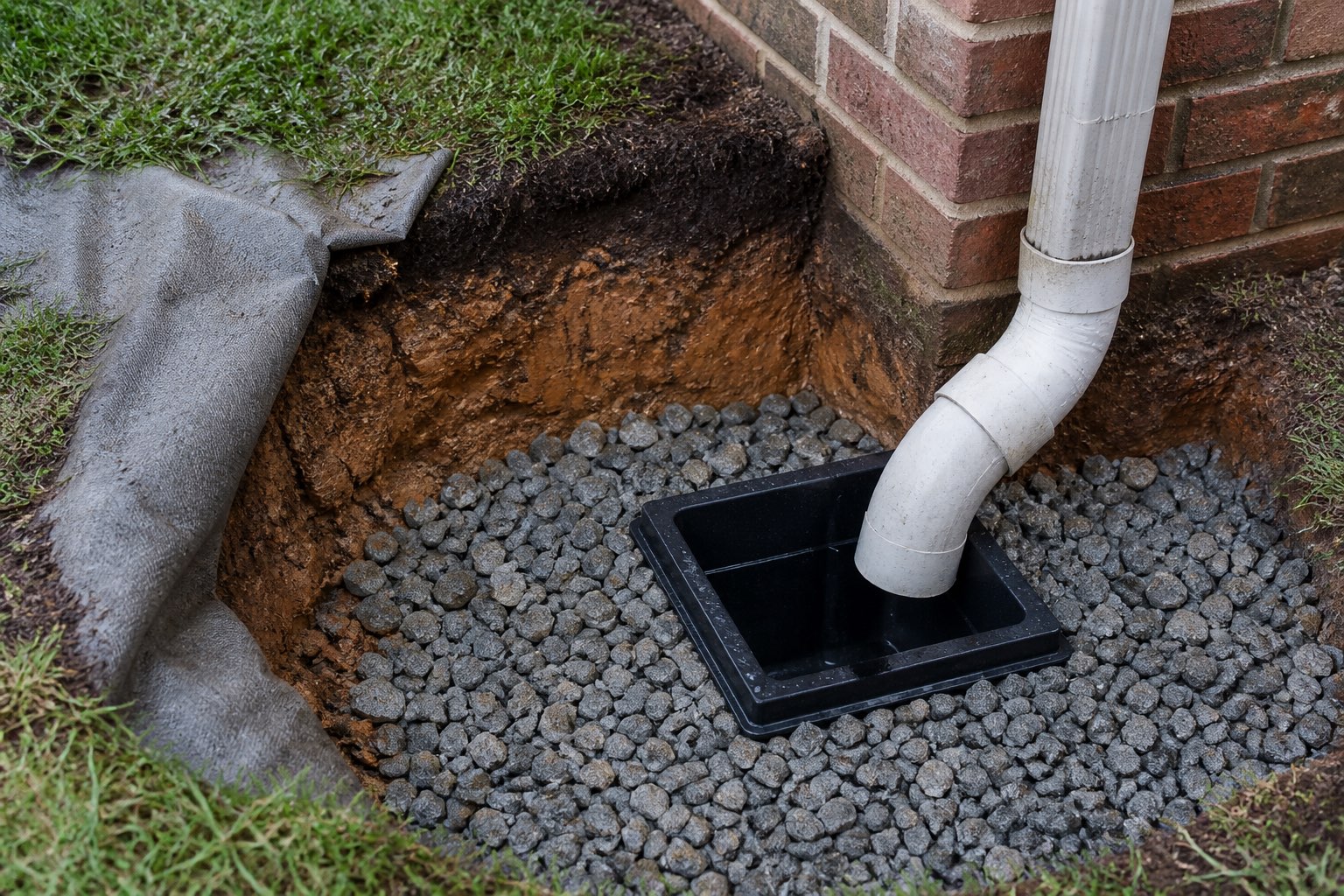
Illustration of a downspout piped into a catch basin, not a photo of an Outdoor Custom Hardscapes job.
Yes: peeling paint, bubbling walls and damp basement corners often start in the yard, not in the paint can. University of Minnesota Extension says a great number of basement water problems can be solved by handling rainwater and surface drainage properly.
That fixes the order of work: correct the grade, downspouts and drains outside, let the wall dry, then repaint. Below: how to tell a drainage problem from a paint problem, a two-day foil test, and where the yard crew's job ends and the painter's begins.
Key takeaways
- Paint is a coating, not a water barrier. University of Minnesota Extension says even an interior membrane or coating is a temporary solution, because the water is still there.
- The pattern is the clue. Damage low on an exterior wall, worse after rain, points to the yard. Damage near a shower or dryer vent points to humidity inside.
- A 24 to 48 hour foil test separates condensation from seepage, using a method from a 1981 Minnesota Extension bulletin.
- The order: stop interior moisture, correct grade, gutters and downspouts, add a drain if needed, let the wall dry, then prep, prime and paint.
- Repainting a wet or moldy wall is the expensive mistake. The EPA says paint applied over moldy surfaces is likely to peel.
Why paint fails from behind
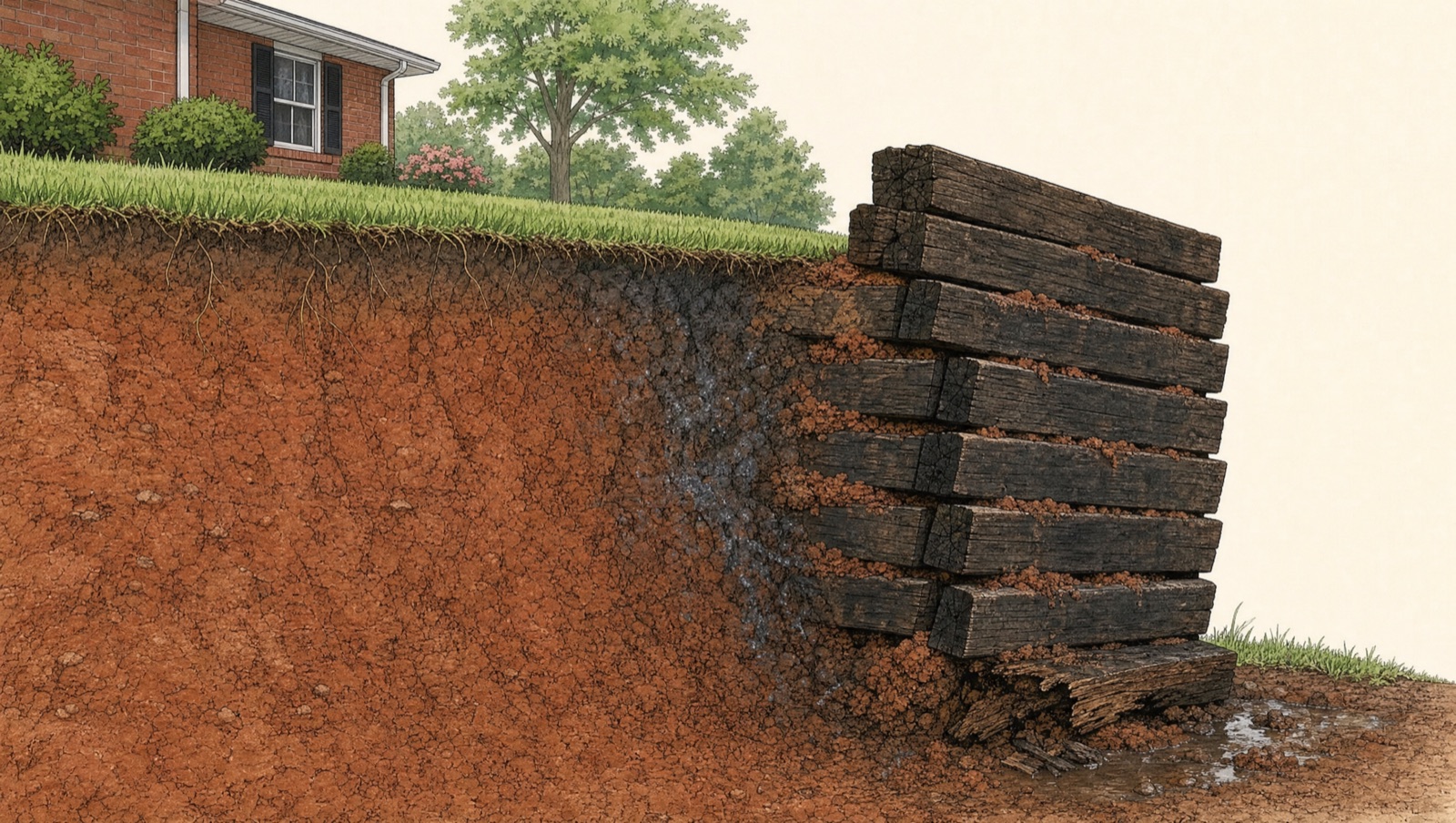
Paint holds onto a surface. When water moves through that surface from the other side, it gets under the film, lifts it into a blister and then a flake. Scraping and recoating treats the blister, not the cause.
University of Minnesota Extension lists blistering wall covering and efflorescence among the symptoms of a basement moisture problem in its guide to moisture in basements (read October 2026). It is blunt about interior membranes and coatings: they seem to work for a time, but the water is still there, and eventually they deteriorate or move the water to another way in.
The EPA is just as direct about painting over mold. Its guide to mold, moisture and your home (read October 2026) says paint applied over moldy surfaces is likely to peel, so clean and dry the surface first.
If you clean up the mold, but don't fix the water problem, then, most likely, the mold problem will come back.
U.S. Environmental Protection Agency, A Brief Guide to Mold, Moisture and Your Home
Drainage problem or paint problem
A yard problem follows the weather and the side of the house. A paint problem follows whoever prepped the wall last.
| What you see | What it usually means | Check first |
|---|---|---|
| Blisters or stains low on an exterior wall, worse a day after rain | Water reaching the wall from the yard | Grade, gutters and downspouts on that side, from outside |
| A damp ring at the base of a block or masonry wall | Moisture drawn up from wet soil | Soil slope along that wall, and where the nearest downspout lands |
| White, chalky crust on masonry | Efflorescence: water has moved through the wall and dried | The outside check, then a foil test |
| Beads of water on cold walls and pipes in summer | Condensation from humid air | Foil test, dryer venting, humidity |
| Peeling on a bathroom ceiling or beside a shower | Household steam | Exhaust fan and vent path |
| One patch that ignores the weather, under plumbing or a roof valley | A leak inside the house or at the roof | A plumber or roofer, before anyone paints |
| Flaking on a wall that stays dry through every storm and a foil test | A paint problem: poor prep or the wrong product | Scrape, prime, repaint |
A two-day test before you spend anything
A cheap diagnostic comes from the University of Minnesota Agricultural Extension Service's 1981 bulletin, Correcting basement moisture problems. Tape all four sides of a small mirror, a piece of shiny metal or a square of aluminum foil to the dampest spot, sealed so room air cannot get behind it. Check it 24 to 48 hours later.
Moisture on the room side means condensation is at least part of the problem. Moisture on the wall side means seepage. Nothing on either side suggests a seasonal cause, so test again when dampness returns. Condensation and seepage can happen at the same time, so a wet result on both faces is not a contradiction.
Run it on the peeling wall and on one that is not, and write the date and the last rain on the tape. A wet wall side after a storm, where the yard slopes toward the foundation, is the best evidence you can hand a drainage contractor.
What the yard has to do first
Three outdoor factors carry most of the load.
Grade. UMN Extension says to slope the soil away from the foundation a minimum of 1 inch per foot for at least 6 feet. The North Carolina Residential Code, 2018 edition, section R401.3, asks new houses for a fall of at least 6 inches within the first 10 feet, and says where a wall, lot line or slope makes that impossible, drains or swales must carry the water away instead. A fair yardstick for an older house, though the code itself speaks to new ones.
Roof water. UMN Extension puts a 1-inch rain at 1,250 gallons on the roof of a 2,000-square-foot house. A downspout that dumps at the wall delivers its share of that volume to one spot. UMN's fix is a minimum of one downspout per 50 linear feet of eave, with extensions discharging at least 4 feet beyond the wall.
Soil. Charlotte sits on heavy red clay, which holds water, as the yard drainage guide for Charlotte notes up front. UMN Extension's capillary rise table gives 12 to 20 feet for clay against a few inches for gravel, which helps explain why wet clay keeps feeding a wall after the rain stops.
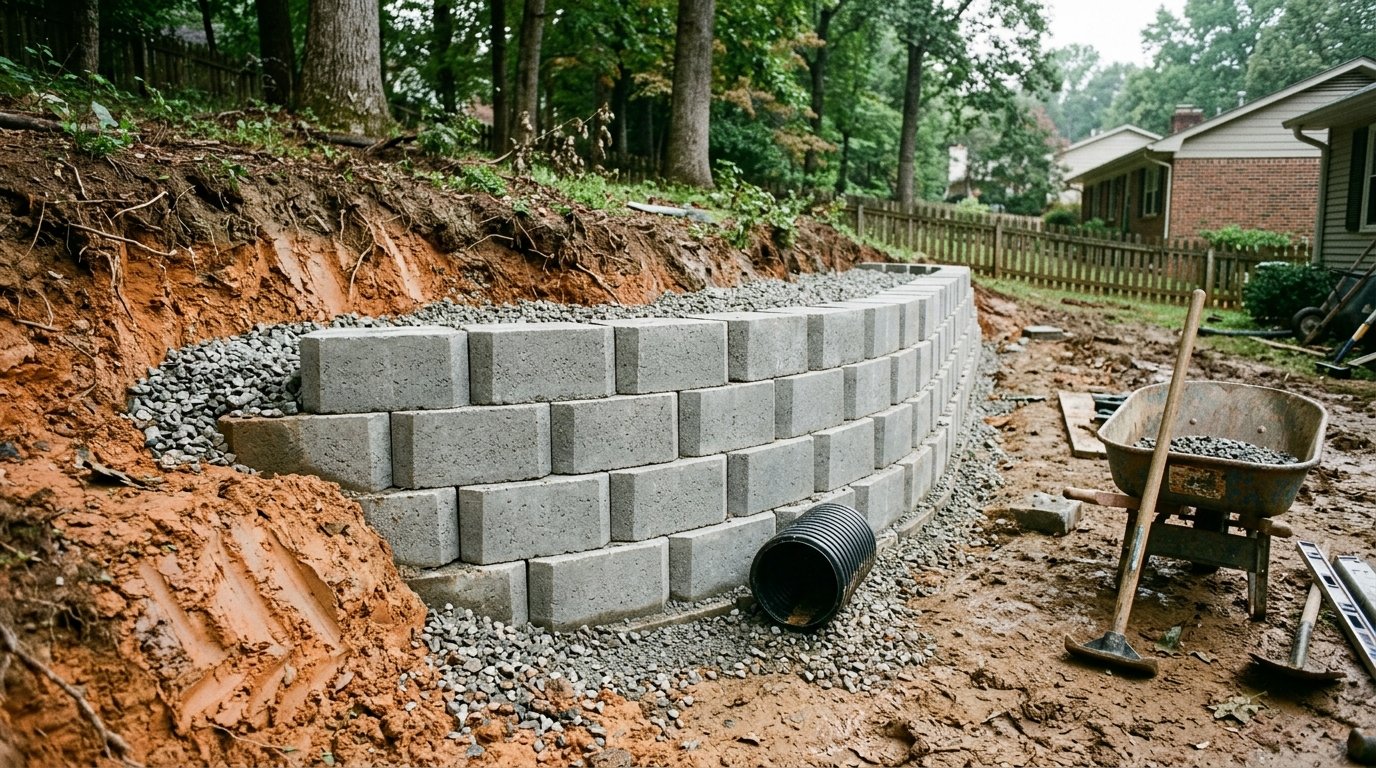
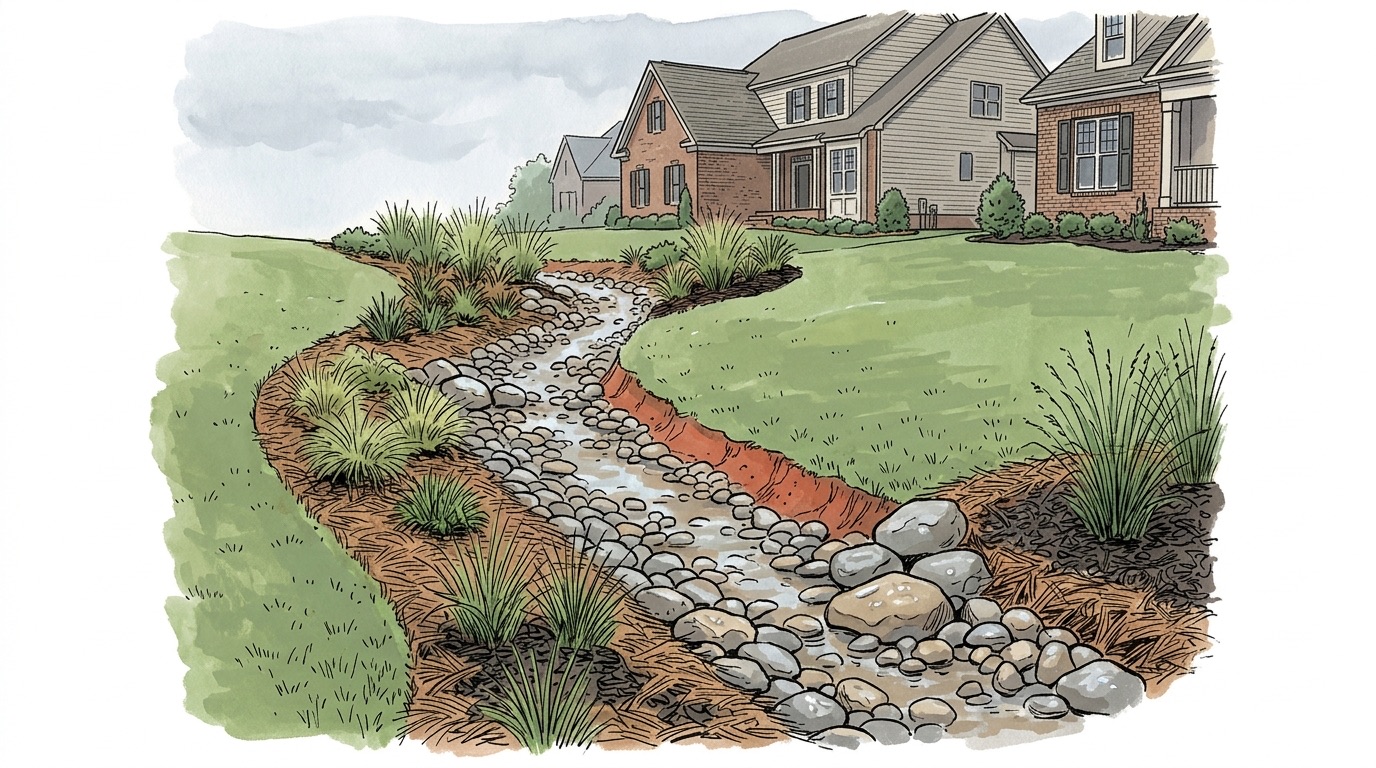
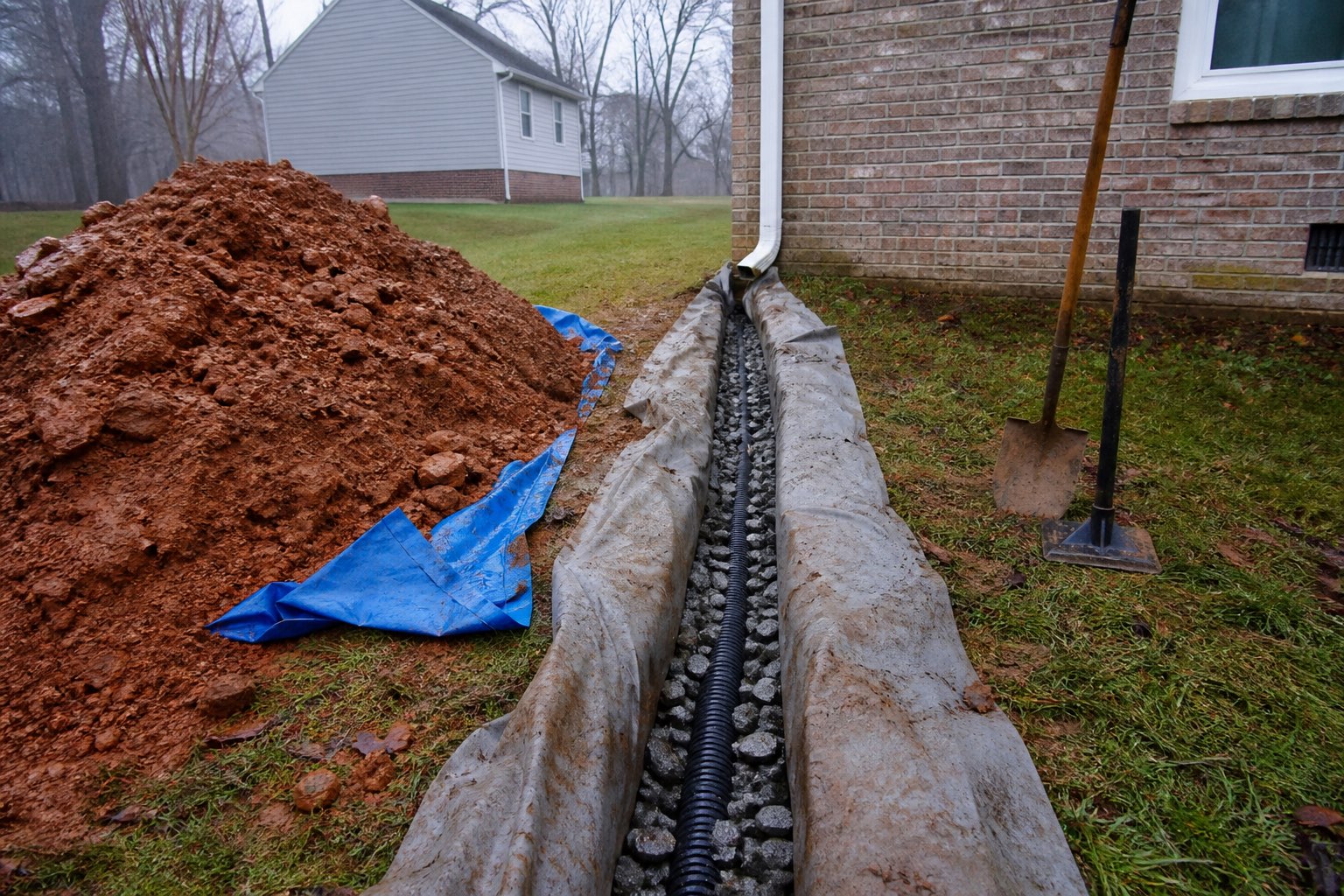
Outdoor Custom Hardscapes' drainage service page lists downspout extension and burial, regrading and swales, French drains, catch basins and dry wells, and foundation waterproofing with membrane and backfill at the wall, and says the crew walks the property in the rain when it can. Not every wet wall needs a trench; the Charlotte guide above sorts those signs, and what sets French drain pricing in Charlotte explains the quote when one does.
The order of work
1. Stop the inside sources. UMN Extension names removing excess interior moisture sources such as humidifiers and cooking, and venting the dryer and bathroom, as the simplest and least costly step. It also keeps steam out of the foil test.
2. Correct grade, gutters and downspouts. UMN says gutters, downspouts and surface grading should be corrected first and may solve the problem on their own.
3. Add a drain if the wall is still wet. If the foil test still shows seepage, UMN's next step is an interior or exterior drainage system. It calls an exterior system the most costly and the most effective, and says it means digging up the area around the foundation. Quote that as its own job.
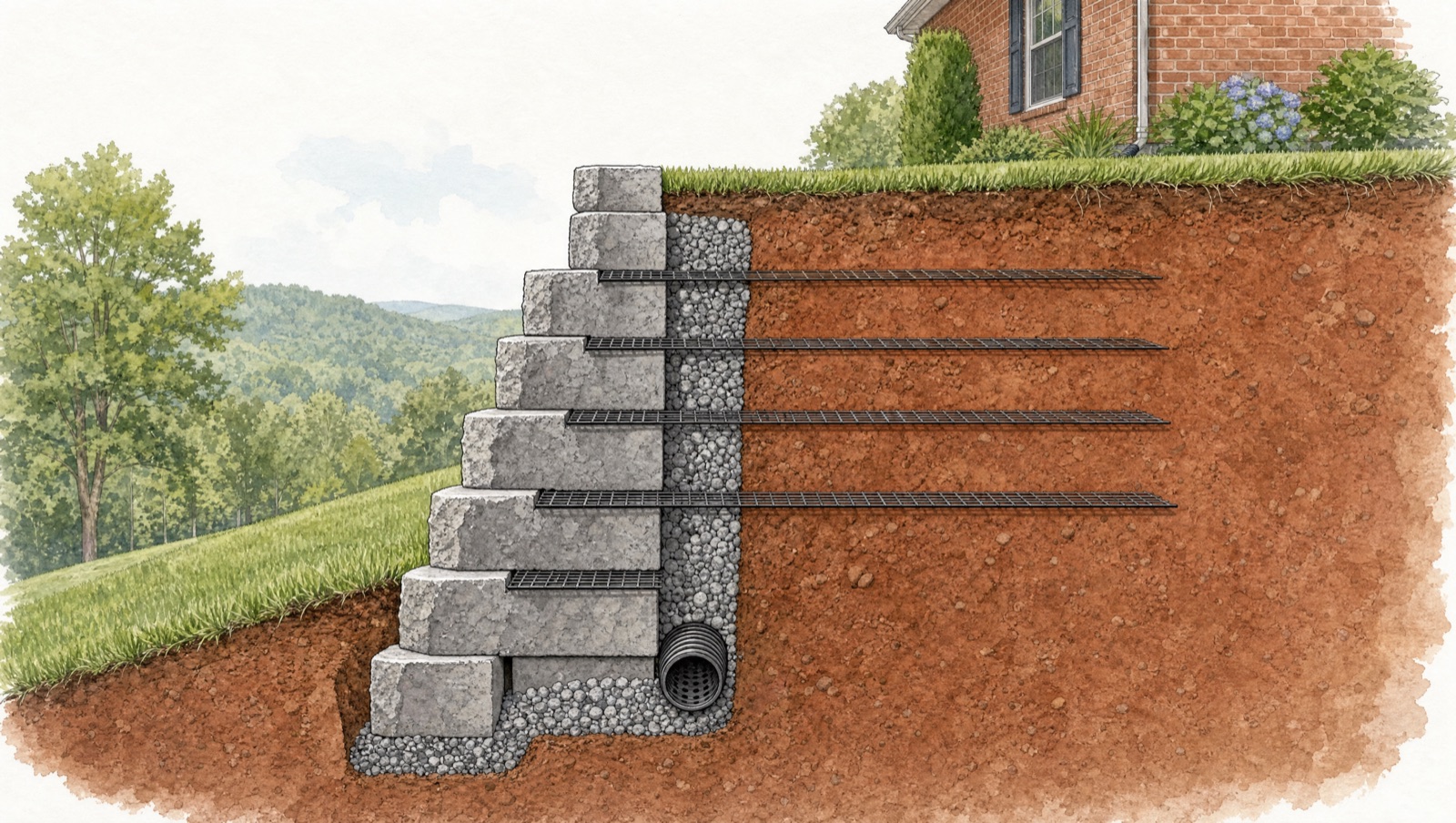
4. Let the wall dry. The EPA says to dry water-damaged areas within 24 to 48 hours to prevent mold growth, which is cleanup guidance, not a rule for a wall the yard keeps wetting. Our rule of thumb after a drainage fix: a foil test that stays dry through a real rain. UMN's rule for insulation, walls must be dry before insulating, applies to paint too.
5. Prep, prime and repaint. Loose paint comes off back to sound material, mold gets cleaned and dried, bare spots get primed, then the finish coats go on. Painting is its own trade, and Outdoor Custom Hardscapes does not do it. For homeowners comparing interior painters in Charlotte, NC, one local option is Chris' Painting & Remodeling, a Monroe company owned by Chris McManus, started in fall 2000, that works in Union County and around Charlotte. Its interior painting page describes walls and ceilings patched, sanded and primed before any color goes on, with two finish coats. Whichever painter you pick, share the wall's water history and the dated foil tests.
What a drainage fix will not do
Yard drainage covers one of UMN Extension's three moisture sources: rain and groundwater. The other two are interior sources such as bathrooms and cooking, and humid outside air condensing on cool surfaces. A regraded yard does nothing for the second or third, and it does not replace a plumber for a weeping pipe, a roofer for a leaking valley, or a structural look at a foundation that is moving.
Starting the drainage walk
If the foil test and the pattern both say the yard, book a visit while the ground is wet or just after rain. Outdoor Custom Hardscapes takes these calls across Charlotte, and the Charlotte service area page is the place to start a free on-site estimate. Bring the dated foil tape and a photo of where each downspout lands.
Frequently asked questions
Can I paint over a damp wall with a stain-blocking primer?
Not while water is still reaching it. A primer is another coating, and UMN Extension says even an interior membrane or coating is a temporary solution because the water is still there. Fix the source, confirm the wall is dry, then prime.
How long should a wall dry before I repaint?
There is no single number. Our rule of thumb after a drainage fix is a foil test that stays dry through at least one real rain; then check the paint's product data sheet for the surface condition it needs.
How do I tell condensation from seepage?
Tape foil to the dampest spot, sealed on all four sides, and check it 24 to 48 hours later. Moisture on the room side means condensation; on the wall side, seepage. Both can be true at once.
Will a dehumidifier fix a damp basement wall?
No. UMN Extension says a dehumidifier can reduce humidity and odor but is not a permanent solution, and it may cause greater damage by drawing moisture in faster.
Could the peeling be a leak and not the yard?
Yes. Yard drainage addresses only rain and groundwater, one of UMN Extension's three moisture sources. A patch that ignores the weather, or sits under plumbing or a roof valley, deserves a plumber or roofer first.